


Beverages are one of the most exciting categories on today’s beverage market. Functional drinks are pushing boundaries like never before: opening up new opportunities to meet consumer needs. Meanwhile, flavour innovation is reaching new heights: with collaborations bringing in new tastes and ideas.
But it’s also an incredibly competitive area: and the harsh reality is that many brands simply won’t make it.
Danny Stepper, CEO of accelerator L.A. Libations, started his career with nearly a decade in the Coca-Cola System before he launched his own incubator and accelerator: being ‘raised by wolves like Lance Collins and Mike Repole’ (the serial beverage entrepreneurs behind brands such as Fuze, Core Water, Bodyarmor and Glaceau).
He’s helped build brands such as ZOA (with Dwayne ‘The Rock’ Johnson); Plezi (with Stephen Curry and Michelle Obama); and Bero (with Tom Holland), to name just a few.
Hot off the press: the launch of Arih: a new brand inspired by Korean megastars BTS, with a postbiotic energy drink and modern noodle concept, with Stepper’s team supporting the launch.
Ahead of The Beverage Forum in LA this week, an event which welcomes 1,300 brands, retailers and stakeholders from across the beverage world, he reveals three keys to succeeding with a beverage brand.
1. Know what you stand for... and believe in it
First and foremost, Stepper says you’ve got to have your brand completely figured out. You’ve got to know what your brand stands for; the need it serves... and absolute conviction in what you’re doing.

“It’s very competitive out there,” says Stepper.
“That’s the reality of it.
“You really have to have your ‘why’ figured out. Does the world really need your product? What’s your reason to be, as a beverage?
“Building a beverage brand is super capital intensive, super competitive and super hard. The odds are against you: so you really better believe that you have something that’s differentiated.”
How to build a beverage brand
Hear other top brand building tips from beverage entrepreneurs around the globe!
- Huib van Bockel, ex-marketing director for Red Bull, shares how he built up clean energy drink, Tenzing
- Dave Burwick, formerly of The Boston Beer Company, Peet's Coffee and PepsiCo, is now using his expertise at sparkling water brand, Spindrift
- And Mike Cessario reveals how he turned the bottled water category on its head with Liquid Death
2. Good timing
There are so many brands competing for just a few spots on shelves. And with it becoming increasingly difficult to differentiate from others, is it just down to luck?
“There are many factors, and and I don’t if I’d call it luck, but timing matters,” counters Stepper.
New beverages want to push boundaries, embrace the white spaces, and create new categories: but it’s a big mission to take on. It’s exciting to build a category, not just a brand: but there’s a lot of work behind this mission.
Take, for example, Zico coconut water, a drink founded in 2004 and which sold to The Coca-Cola Company in 2013.
“It took us a long time to explain to people that coconut water was about hydration,” recalls Stepper.
“And then there’s capital: to educate consumers is very expensive.”
And building up a category also means welcoming - and embracing competition. So the timing of the competition is key, too.
“I don’t think Zico would have been Zico without Vita Coco,” says Stepper. “The collective competition and energy that was thrown up helped both companies rise up: and Keurig Dr Pepper got behind Vita Coco and Coke got behind Zico.”
It’s an analogy that’s easily transplanted a decade later: to the rise of gut health soda duo, Olipop and Poppi.
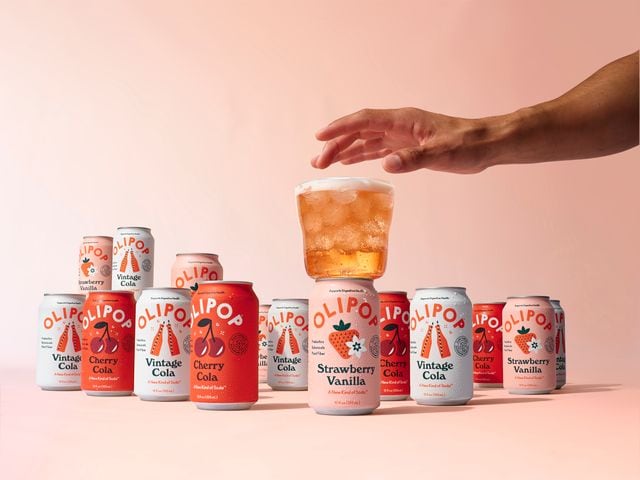
The two entrepreneurial beverage brands have carved out gut health soda as a category. And, with other better-for-you brands such as Zevia, they’re re-imagined what soda can be, with the emergence of the ‘modern soda’ shelf.
3. Be prepared to play the long game
Success rarely happens overnight. Many brands - even with the best minds behind them - take a while to find their groove.
“We sold Bodyarmor to Coke for $8bn, but people forget that was a 10 year overnight success story,” says Stepper. “The first four years, nothing happened. Except pivoting, changing, tweaking, getting it right.”

An even better example is Celsius: the brand founded in 2004 with a focus on fat burning.
It took 15 years for the brand to find its mainstream momentum: now it’s a superstar brand in better-for-you energy for all with an expanding portfolio of drinks (including the acquisition of Alani Nu last year).

Then there’s ZOA: the brand that launched in 2021 in 16oz black cans. But Stepper is quick to admit that just wasn’t right: and a lot of work went into revamping and relaunching the brand.
The brand ultimately pivoted to the bright, better-for-you positioning it’s known for today (with Molson Coors taking a majority stake in 2024).

Beverage brand builders can never just launch a product, then sit back and relax.
“You’re never done,” says Stepper. “There’s no finish line. It’s a constant evolution and you’re constantly making it better. And that mindset is really important.”


