


Beverages were once just about hydration: now they’re about much more.
From protein to gut health, and from energy to mental health, they offer myriad benefits to help consumers get more from their day-to-day lives.
It’s a powerful upgrade from the past norms of soda or sugary drinks.
And functional beverages sit at a unique intersection of modern health, lifestyle, culture and wellness. They help consumers manage modern health problems - like sleep and stress - and can become part of everyday life.
For many consumers, the science is crucial: but so is the brand and the idea of becoming part of a community or lifestyle.
Functional beverages will transform the beverage market over the coming years: but the category itself will also evolve to meet consumer demands. How will we see the market reshape?
1. Functional layering
The new generation of functional drinks are looking at providing not just one, but multiple benefits.
“The next frontier is functional layering,” says Betty Kaufman, strategy director, at US food and beverage innovation consultants, The Culinary Edge.
“That means products that combine multiple benefits, such as adaptogens, nootropics, hydration, energy, fiber, or protein.”
That often means combining benefits that wouldn’t previously have gone together: natural energy drink Brite, for example, boasts energy plus focus.
It’s an opportunity to meet multiple consumer needs at once: and set brands apart from the competition. But the opportunity needs to be navigated very carefully.
“Brands must avoid overwhelming consumers with over-complicated messaging,” says Kaufman. “The most successful brands will remain disciplined about what they stand for.”
2. Clean label
Consumers want - and demand - that products do more.
And yet at the same time, they want fewer and simpler ingredients.
That creates a paradox that functional beverage manufacturers need to address.
“Consumers want the functional benefits of these products, but also crave simplicity, natural and organic formulations,” explains John Scheer, co-founder and chief creative officer at branding and innovation agency, Herman Scheer.

It won’t be an easy issue to navigate: but the rewards could be huge.
“The brands that resolve this tension most elegantly will win shelf space, and loyalty, in equal measure,” he said.
3. Proven efficacy
Functional drinks need to deliver if consumers are going to return to them again and again. Clinical studies and scientific backing have always been important in convincing consumers of a drinks’ worth.
But scientific backing will become even more important.
Consumers are increasingly turning to AI for advice on nutrition, and relying on AI to recommend brands that meet their needs.
In this era, it won’t be social media or influencers that surface brands: AI will draw on the factual, scientific information about brands and their functional claims.
“A lot of AI models are starting to take in the clinical research around ingredients,” said Sean Harapko, EY Americas beverage leader.
“So brands are going to have to make sure that the research and details are now front and centre.”
4. Personalisation
Personalisation has been touted as a hot trend for years: but now AI will help it finally reach its potential.
Singapore microbiome firm AMILI and Google are planning to launch a personalised nutrition mobile application. UK gut health brand Zoe offers an app to give personalised, evidence-based nutrition feedback in seconds.

CBD and THC brands are commonly offered in a range of doses, making sure there’s a level that suits all consumers.
Expect functional beverages to become more personalised and with more options for consumers.
5. Affordability
Functional beverages offer a value-added proposition: and are able to able to command a premium as a result.
But that’s also a problem: 32% of UK consumers avoid the category as they believe it’s too expensive, according to Vypr.
“Brands need to justify their prices through genuinely-felt outcomes; taste; and real value for money,” says Adam Simpson, drinks expert at product intelligence business, Vypr.
And now there are more macro challenges. Consumers are feeling the pressure and are likely to look to downgrade their beverage choices. This, however, opens up an opportunity for private label functional beverage brands; or functional beverage brands that can offer a lower price point.
In the UK, It’s Giving, a high fibre soda, has launched priced at £1 per can. And founder and serial beverage entrepreneur, Simon Gray, believes its completely possible to offer the premium benefits of functional benefits without a premium price tag.
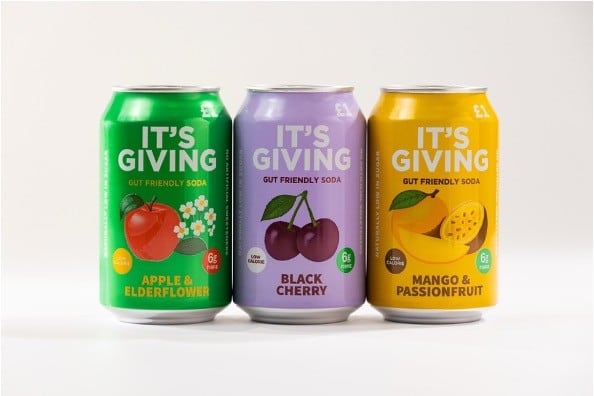
The innovator (who founded energy drink Boost Drinks and sold it to AG Barr in 2022), he says that, with the right strategy, functional beverages don’t have to be expensive.
“Fibre is an expensive ingredient, relative to standard soft drinks,” he said. “But we’ve done our maths: we can deliver great value to consumers without any compromise on taste.”
Expect more value options and private label alternatives to enter the market.

