

Baby Boomers sipped on mocha and mint flavoured ‘hard’ milks by Malcolm Hereford Cows. Millennials snuck out with bottles of fluorescent Bacardi Breezer and WKD. And for Gen Z, it’s BuzzBallz…
Described by one journalist as “a visual mash-up between a Christmas bauble and a hand grenade,” the unmissable RTDs (ready-to-drink), in their signature spherical containers, have enjoyed pretty stratospheric success since their first went on sale in the US in 2010.
Ahead an acquisition by spirits giant Sazerac in 2024, the brand is believed to have hit retail sales values of around $200m. In the UK alone, the 13.5–15% ABV cocktails have recorded off-trade sales of £24.6m [NIQ 52 w/e 6 September 2025] – a volume growth of nearly 800%.
Though it’s not only in the west, in India BuzzBallz recently landed a range of new flavours – Berry Lemon, Strawberry and Chilli Guava. They’re sold in Japan, Taiwan, across Europe and dozens of other markets.

So, what is it exactly about BuzzBallz that has made it the RTD of choice for a generation of drinkers known for shunning boozy nights out?
It surely helped that BuzzBallz wasn’t borne from a corporate product development lab or consumer feedback session, but from a plucky young entrepreneur.
The story goes that founder Merrilee Kick, then a student, first conceived of the idea while gazing into a Swedish crystal snowball in 2009 and wondering what it’d be like to drink out of it. A few months later, while shopping for tennis balls in Walmart, she realised the same metal pull-top would make for a great seal on such a container.
The concept became Kick’s college thesis before a small business loan allowed her to develop the design and begin manufacturing. The brand went on sale the same year she collected her MBA.
RTD affordability
Hitting the market ahead of the wider boom in RTD cocktails, it wasn’t an overnight success. Kick tweaked recipes in a home kitchen, toured convenience stores “like a vacuum cleaner salesman” when distributors didn’t bite and shunned traditional outsourcing models to achieve full vertical integration instead, a move that has been instrumental in helping keep the price of BuzzBallz low.
That affordable price point, at a time of major price pressures and wider F&B inflation, has been a major part of what has made the RTD so appealing, believes Guy White, CEO of innovation consultancy Catalyx.
“It delivers great ‘value-per-effect,’ he says. “With a bar-strength 13.5% ABV, it offers a cost-effective pre-drink solution during a cost-of-living crisis that requires absolutely no preparation and can be taken anywhere.”
Price is only one of a “stack of features” that feed into BuzzBallz popularity, he adds. “The packaging is fantastic and stops the scroll. The sphere is an iconic object first and a drink second. It is immediately recognisable as a product from 10 metres away or in a split second on TikTok. Both product and packaging work so well together that I think it’s managed to transcend its own category. Consumers aren’t just buying a cocktail; they are also buying a social media prop that signals ‘party’ instantly.”
It’s not trying to be a bar-quality cocktail in a can. It’s a party in a ball
Lorna Hawtin, chief strategy officer at Zeal
Indeed, the shareability or social buzz that underpins BuzzBallz has been crucial in cutting through to Gen Z, a generation known for their habit of scaling back when it comes to alcohol. Consumers aged 20–24 are almost half as likely to prioritise spending on alcoholic drinks for the home than consumers aged over 75, according to Mintel, and around a third of 18–24-year-olds don’t drink at all.
“From our experience of launching new drinks to the Gen Z audience, you need to focus on desirability: that’s the thing that gets the hype going,” says Fiona Beauchamp, activation director at Bray Leino.
“BuzzBallz is so simple in its innovation of making the pack into the often instagrammed ‘Fishbowls’ so that it becomes the central part of the desired experience – playful, fun pre-drinks. Especially with the Biggie format [1.75l bottles] building the collective experience.”
A strong flavour game
“And let’s not forget its strong flavour game,” points out Lorna Hawtin, chief strategy officer at Zeal, with a range that includes Strawberry ‘Rita, Chili Mango, Watermelon Smash, Lotta Colada, Cran Blaster, and Choc Tease. “It’s unashamedly indulgent, sweet and punchy, with its playful naming is definitely designed to make you smile. It’s not trying to be a bar-quality cocktail in a can. It’s a party in a ball.”
All of this combines to turn BuzzBallz into a moment that Gen Z reach for on the occasions when they do want to drink alcohol. “It plugs into deeper shifts in drinking culture: younger consumers drinking less frequently but with more intent, choosing drinks that feel distinctive, transportable, and crucially, shareable,” adds Hawtin.
Turning cultural or social hype into commercial longevity with Gen Z can create a challenge for brands, however. When it first launched in 2023, for example, Prime Energy led young fans to queue outside stories overnight in a bid, stocks selling out in minutes and an underground market emerging which saw bottles flogged for hundreds of dollars. Two years on, sales have plummeted.
But BuzzBallz has got the hallmarks of a brand with greater staying power than some of its predecessors, believe Sean Miller, brand strategy executive at Interbrand. “Brands that tend to fizzle out are those that had a meteoric rise based on influencer endorsement, a passing flavour trend, or a link with a particular style,” he says.
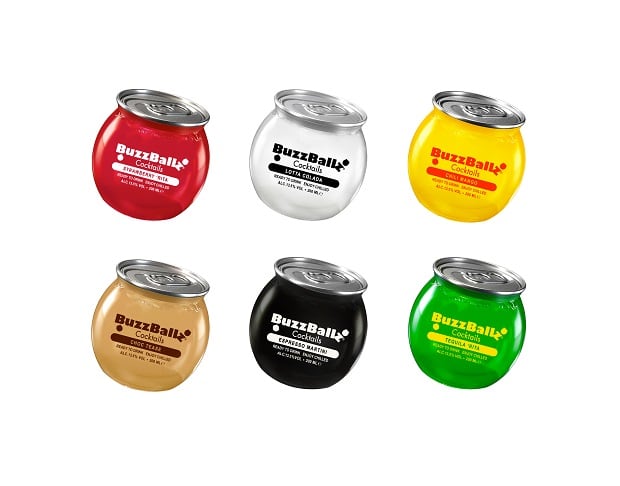
But, he continues, “the acquisition of BuzzBallz by Sazerac points to a more enduring success path through global distribution and experience to fuel innovation. And since its success is not driven by any particular flavour or variant (they offer chillers, cocktails and mixed drinks), they still have the space to innovate based on cultural tastes”.
Moreover, unlike the beleaguered energy drinks market, BuzzBallz taps into a longer-term category trend that shows no sign of fizzing out. The RTD segment grew volumes by 2% globally in 2025, according to IWSR, outperforming beers, wines and spirits, as consumers across generations bought into the convenience and significantly improving quality of many RTD cocktails and mixers.
“BuzzBallz success proves the consumer relationship with RTDs has shifted from compromise to control,” believes White. “Previously, buying an RTD often meant accepting lower quality for the sake of convenience and mobility. However, BuzzBallz have delivered on taste, strength and, with cocktails in major cities hitting up to £20, it’s also perceived as a smart economic hack.
“I think BuzzBallz has demonstrated that the alcopop is far from dead, it just needs to be brought bang up to date.”